Key takeaways
- W means water-based cleaner, S means solvent only, WS means either, and X means vacuum or brush only.
- The code is a manufacturer guideline, so always run a fabric test in a hidden spot and let it dry fully before judging.
- Never dab an S code couch with a wet rag, because water rings on solvent-only fabric can be very hard to fix.
W means clean with water-based cleaners, S means use only water-free solvent cleaners, WS means either works, and X means vacuum or brush only with no liquid cleaning of any kind. The code is on a tag under a seat cushion or along the frame, and it's the manufacturer's guidance for that fabric. Check it before you spray anything. Then, unless it's an X, test a hidden spot.
What do the couch cleaning codes W, S, WS and X mean?
Here's the quick version I give people at the door:
| Code | What it allows | What to avoid |
|---|---|---|
| W | Water-based cleaner, upholstery shampoo, low-moisture extraction | Soaking the cushions, solvent cleaners |
| S | Solvent cleaner only (dry-cleaning type products) | Any water, including a damp rag |
| WS | Water-based or solvent cleaner | Mixing both on the same stain |
| X | Vacuuming and light brushing only | Water, solvent, foam, steam, all of it |
These codes come from the furniture manufacturer. They aren't a law, and not every maker applies them the same way. They're guidelines based on how the fabric was woven, dyed, backed and finished. A mill knows whether its dye holds in water or lifts the second it gets wet, and the code is how that knowledge reaches you.
The reason is simple chemistry. Some dyes are water-soluble and run. Some backings shrink or pucker when wet. Rayon and certain cotton blends distort or stiffen with water but tolerate solvent fine, and other fabrics are the reverse.
Not every tag shows a single letter. You might see "Cleaning code: S," a short sentence like "Clean with water-based shampoo only," or a small symbol. They mean the same thing. If the wording confuses you, match it to the four categories above.
Where do I find the cleaning code on my couch?
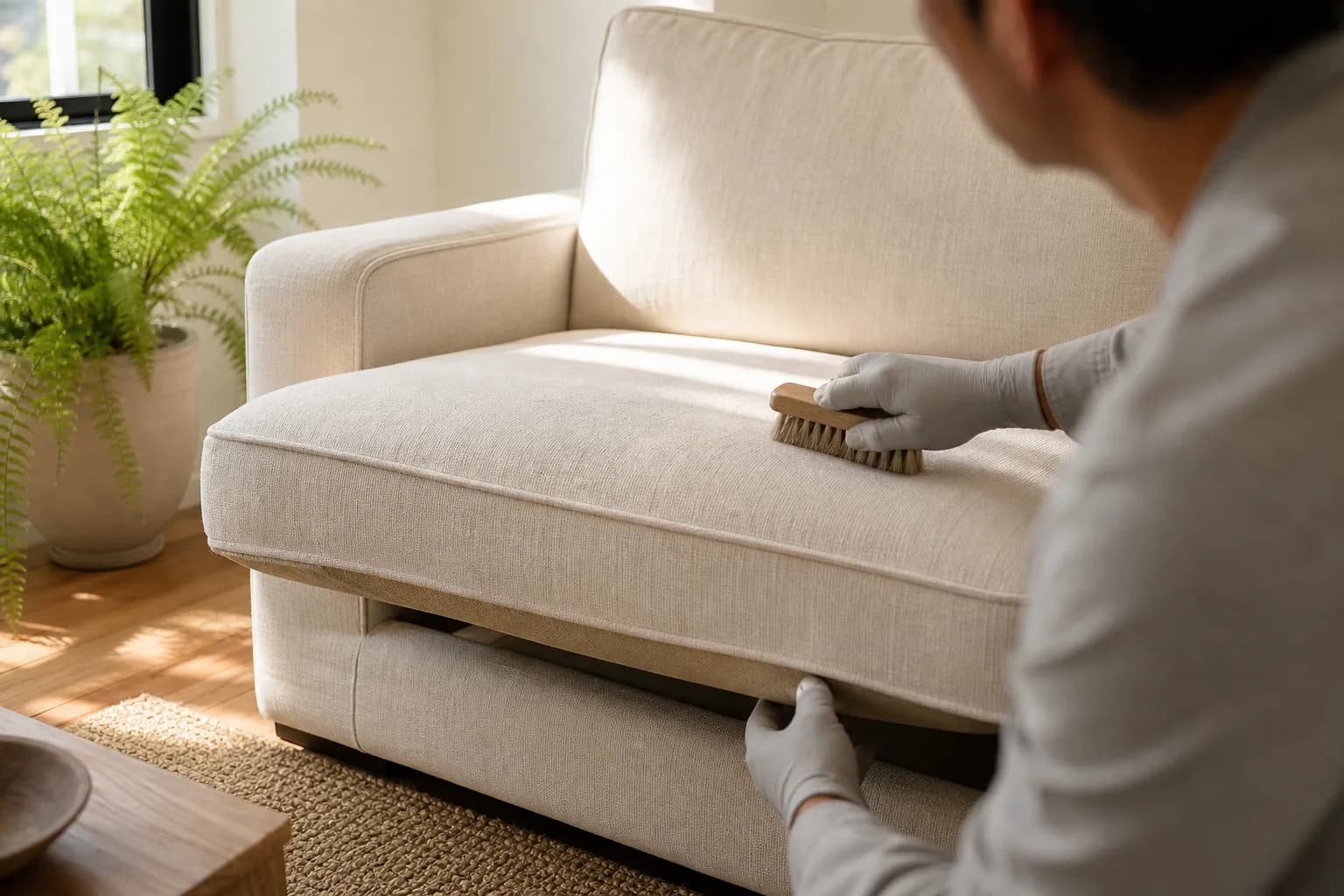
Pull the seat cushions off first. Look on the deck (the fabric platform the cushions sit on) and at the cushion zippers. Tag placement varies by maker, so if it's not there, check:
- The underside of the frame, usually stapled to the dust cover
- Behind the skirt, if the couch has one
- The back panel near the bottom
- Inside the cushion cover itself, by the zipper
A sectional can have a tag on every piece, so check each one. Pieces get replaced, bought later, or made in different runs. I've seen sectionals where one section's fabric didn't behave like its neighbors.
If the tag is gone (cut off, faded, or never there), look up the brand and model on the maker's website, or call their customer service with the model number. If you can't find it anywhere, treat the fabric as unknown. Clean it as if it could be an S or X until a test tells you otherwise.
One habit saves a lot of trouble: take a photo of the tag today and keep it on your phone. Tags fade and get snipped, and you'll want that info the day someone spills coffee.
What can I clean a W code couch with?
W is the friendliest code for DIY. Water-based upholstery shampoos are fine, and so is professional low-moisture extraction. Plenty of microfiber and polyester couches are W or WS, but the tag on yours is what counts.
Water-safe doesn't mean you should soak it. Under the fabric is foam padding, often with a cotton or jute layer, and foam holds water like a sponge. When it dries slowly, dissolved soil and minerals from deep in the cushion get carried to the surface as the water evaporates, and they leave brown edges. The cushion can start to smell musty. Some fabrics even water-ring when the code says water is allowed.
In San Diego, dry time is the part people underestimate. Near the coast, the marine layer can keep indoor humidity high through the morning. A cushion that dries in a few hours inland in El Cajon or Escondido can stay damp much longer in a beach-area home. So when you clean a W code couch:
- Use as little liquid as you can, and blot instead of scrubbing
- Run a fan across the fabric, not just in the room
- Open windows if it's dry outside, or run the AC or a dehumidifier if it's muggy
- Stand cushions on edge so air reaches both sides
- Keep people and pets off until it's fully dry to the touch, seams included
DIY on a W code is reasonable for small, fresh spills and light spot cleaning. A full-couch cleaning, big set-in stains, pet urine, or a couch that's gone dingy all over is where a pro makes sense. Truck-mount upholstery tools pull moisture back out as they clean, and a spray bottle and a towel can't do that.
Why can't I use water on an S code couch?
S means solvent only. Water on an S code fabric can leave rings, shrink or distort the weave, or make the dye run. The classic mistake is the "I just dabbed it with a wet rag" ring: a clean-looking circle with a darker or lighter halo, sometimes bigger than the original stain. The halo is where water carried dissolved soil and minerals to the edge and dropped them as it dried. Once it's there, it can be very hard to fix.
Solvent cleaners are dry-cleaning type products. They work, but they're often flammable and the fumes are strong, so:
- Use them with windows open and good airflow
- Never use them near open flames, candles, a gas fireplace or a water heater pilot light
- Don't use them in a closed room or a small enclosed space
- Put a small amount on a white cloth, not straight onto the fabric
Solvent is good on oily stains like body oil on armrests, lotion, and greasy food. It isn't great on heavy all-over soil, the gray dullness that builds up on a couch that's been sat on daily for years. For that, a tech usually spot treats with solvent, then uses a carefully controlled low-moisture technique, and only after a test shows the fabric tolerates it.
I'll be straight about S code fabrics: some will never come fully clean. Certain rayon blends and delicate weaves already show wear patterns that cleaning can't reverse. If that's your couch, we'll say so before starting, not after.
What does a WS code mean, and is it really safe for both?
WS means water-based or solvent cleaners are both acceptable. It's the most forgiving code. Water handles juice, coffee and mud. Solvent handles oils and grease.
Forgiving doesn't mean foolproof. Color bleed can still happen, especially on older pieces, darker dyes, or couches that have been cleaned with harsh products before. Fiber type still matters too.
On a WS code I pick the gentler method first. Usually that's a solvent spot test on an oily stain, or low-moisture cleaning for general soil. If that works, you're done, and you never pushed water deep into the cushion.
One rule people break all the time: don't mix products on the same stain. Say you hit a spot with a water-based cleaner and it didn't come out. Don't follow it with solvent, then a store-bought spot remover, then vinegar. Mixed chemistry can set the stain, leave a sticky residue that attracts more dirt, or create a ring worse than the original spot. Let it dry, and call a pro if the first attempt didn't work.
What does an X code mean, and can anything be done?
An X code means vacuum or light brushing only. No water, no solvent, no foam cleaner, no steam. Liquid on these fabrics can cause shrinking, permanent staining, or dye that runs.
Professional cleaning on an X code piece is a risk call. Sometimes a tech can do limited dry work, like careful vacuuming and dry soil removal. Sometimes the honest answer is that we'd decline, because the likely outcome is a couch that looks worse. We'll tell you which one it is.
What you can do yourself:
- Vacuum weekly with a soft brush attachment, working with the nap
- Rotate and flip cushions so wear spreads evenly
- Keep it out of direct sun, since UV fades dyes fast
- Keep beach sand off it. Sand from towels, kids and dogs works into the weave and grinds at the fibers every time someone sits down, and it gets tracked in constantly in homes near the beach.
For a heavily soiled X code couch, the practical options are a fitted slipcover, throws on the high-use spots, or professional reupholstery if the frame is worth keeping.
Is the cleaning code enough, or should I still do a fabric test?
The code is a starting point, not a guarantee. A couch that's ten years old, sun-faded, treated with a stain guard, or cleaned with who-knows-what by a previous owner can behave differently than it did the day it left the factory. That's why we test every W, S or WS piece first, even when the tag is clear.
The one exception is an X code. Don't test an X code couch with any liquid or solvent, even on a hidden spot. The code says no liquid, and a test spot is still a spot. If it's an X and it needs more than a vacuum, call a pro.
For W, S and WS couches, here's how to do your own fabric test:
- Pick a hidden spot: under a seat cushion, on the back skirt, or the back panel near the floor.
- Apply a small amount of a product the code allows to a white cloth, not directly on the fabric.
- Press and blot the spot gently for a few seconds.
- Check the cloth for color transfer. Any dye on the cloth is color bleed, and you should stop.
- Let the spot dry completely.
- Look for rings, shrinking, stiffness, fuzzing or a change in texture or sheen.
Tech tip: Don't judge the test while it's wet. Damp fabric hides rings and texture changes that only show up once it's fully dry. Near the coast on a gray morning, give it several hours or even overnight before you decide it passed.
The code also doesn't tell you everything about fiber behavior:
- Microfiber and polyester blends: usually W or WS, but some microfiber is solvent-only and shows water spots badly. Check the tag.
- Cotton and linen: can shrink, brown out, or wrinkle with too much water.
- Velvet: the pile crushes and can mat if it's overwet or rubbed hard.
- Leather: keep it separate. Leather has its own care and conditioning, and fabric codes don't apply to it.
When I clean a couch, the order never changes. Read the code, test for bleed and shrinkage (unless it's an X), then choose between low-moisture extraction and a solvent method based on what the fabric tells me.
Your next step: pull a cushion, find the tag, and snap a photo of it. If it's a W or WS and the stain is small and fresh, a careful spot clean with a test first is fine. If it's an S or X code, the stain is big or old, or you can't find a tag at all, ODK Services can come read the fabric and tell you honestly what's possible before anything gets wet.
Frequently asked questions
What if my couch has no cleaning code tag?
Look up the brand and model on the manufacturer's website or call them with the model number. If you can't find it, treat the fabric as unknown and assume it could be S or X. Do a fabric test in a hidden spot with a small amount of product and let it dry fully before going further, or have a tech test it for you.
Can I use a steam cleaner or carpet cleaner on my couch?
Only on a W or WS code, and even then be careful. Home carpet machines tend to put down more water than they pull back up, which soaks the foam and leads to slow drying, browning and musty smells. Never use one on an S or X code fabric.
Does the cleaning code apply to the cushion covers and the frame fabric the same way?
Usually, but not always. Replacement cushion covers, mismatched sectional pieces, or covers from a different production run can carry a different code. Check every tag you can find, and if the covers have their own tag, follow that one for the covers.
Are microfiber couches always safe for water-based cleaners?
No. Many microfiber couches are W or WS, but some are S code and will show water spots or rings if they get wet. Always check the tag and test a hidden spot before using any water-based cleaner.
How often should I clean my couch based on its code?
Every couch benefits from weekly vacuuming with a soft brush, regardless of code. For W and WS fabrics in regular use, a professional cleaning every year or two keeps soil from building up. S and X code pieces need more frequent dry care and spot attention, since deep cleaning options are limited.