Key takeaways
- Steam cleaning is hot-water extraction, and it's the method most carpet manufacturers recommend because it rinses soil out instead of just lifting or bundling it.
- Encapsulation and bonnet cleaning dry in an hour or two and work well for light-soil maintenance, but they don't remove deep soil, grease or pet urine.
- Check your carpet warranty and lease before booking, and keep invoices showing the cleaning date and method.
For most homes, steam cleaning (hot-water extraction) is the better choice. It rinses soil out of the carpet instead of just moving or bundling it, and many manufacturers name it as their preferred method in warranty guidance. Terms vary by brand, so check yours before you book. Dry methods like encapsulation fit light maintenance, commercial carpet, or jobs where you can't wait for drying time. Bonnet cleaning is a surface method, best as a quick refresh between deeper cleanings.
What's the actual difference between steam cleaning and dry carpet cleaning?
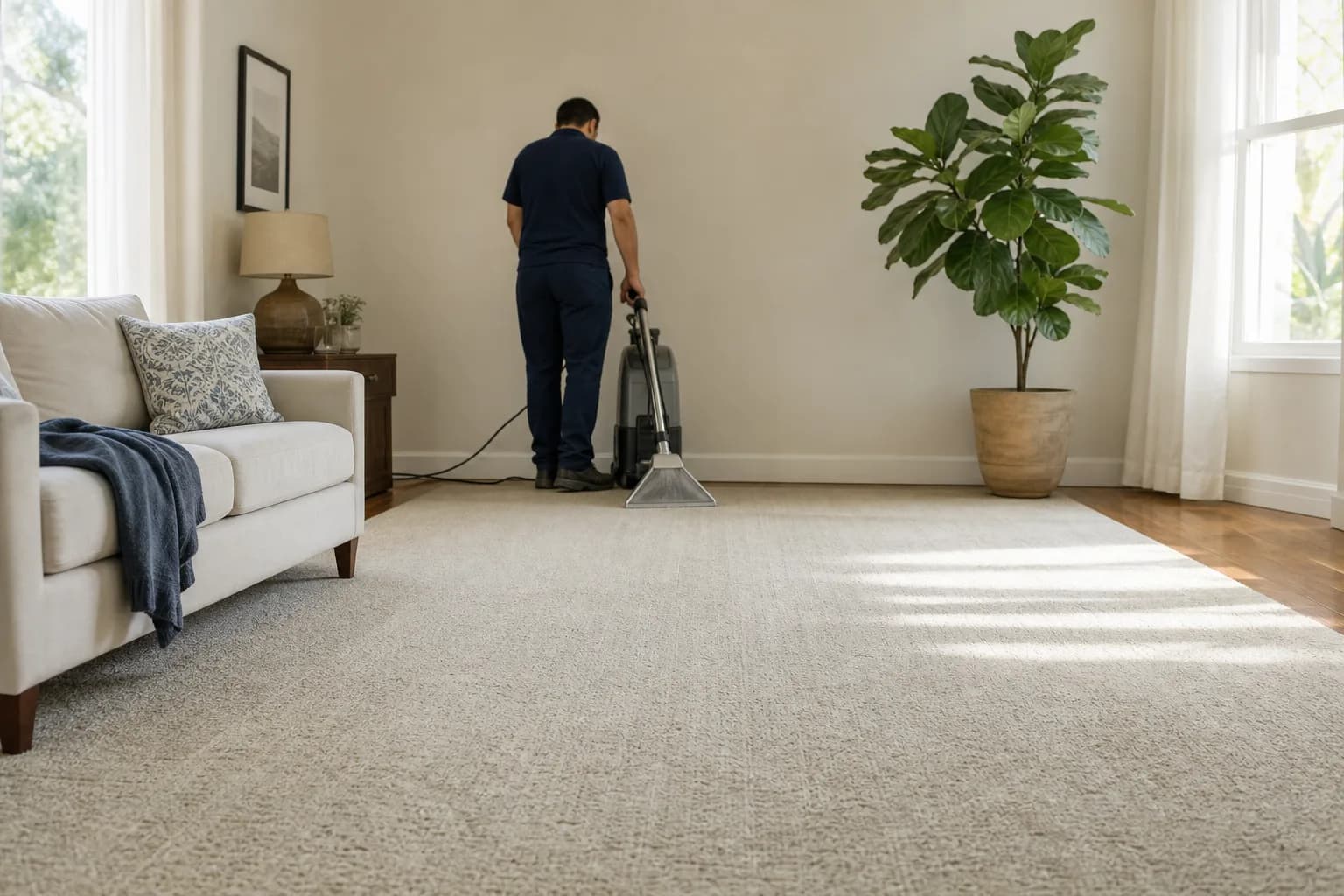
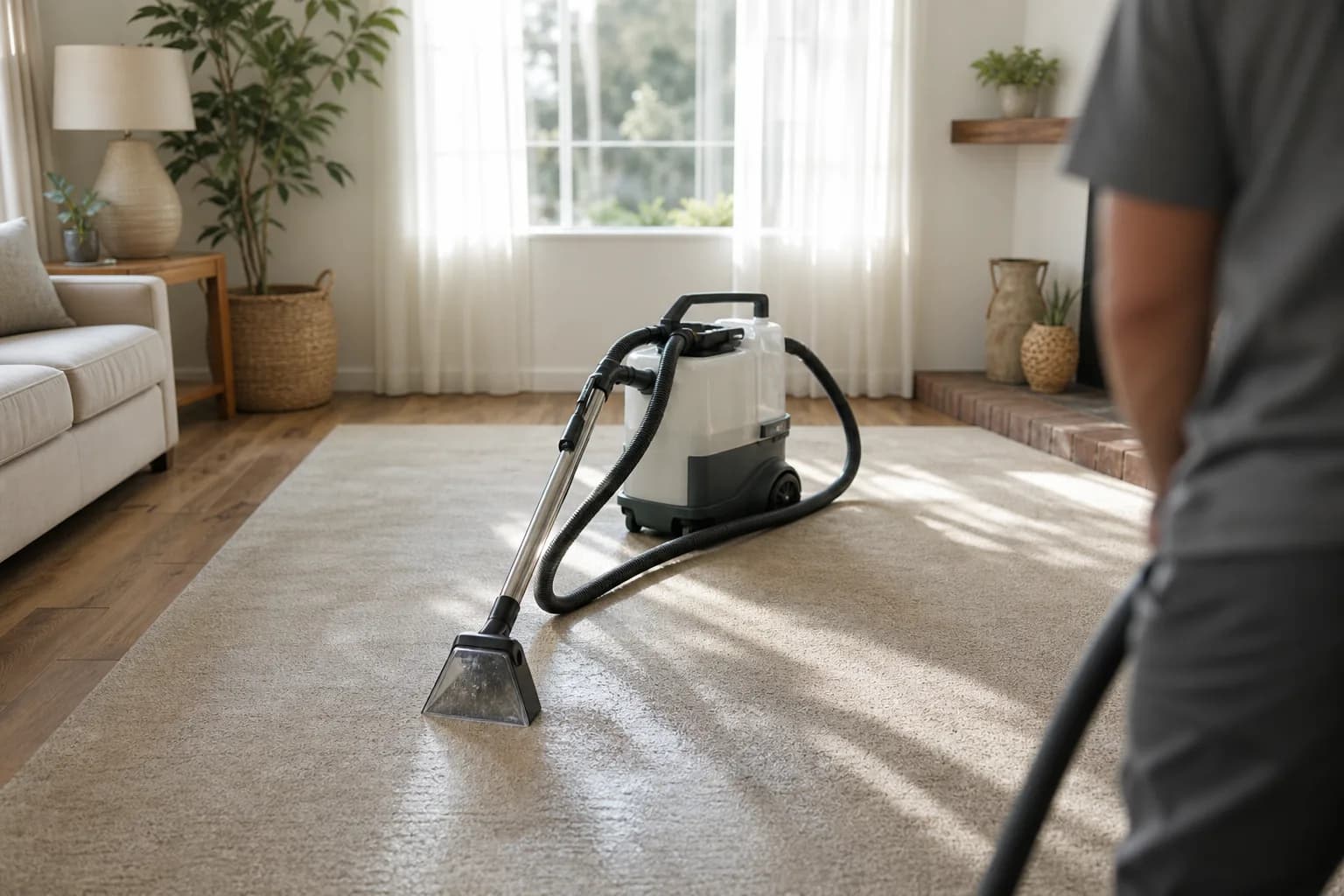
Start with the words, because they confuse people. "Steam cleaning" is hot-water extraction. The water is hot, but nobody is blasting your carpet with a cloud of steam. A truck mount heats water, sprays it under pressure into the fibers through a wand, and vacuums it back out in the same pass. The "steam" you see on a cool morning is just hot water meeting cool air.
"Dry cleaning" is a catch-all. It usually means one of three things:
- Encapsulation: a low-moisture cleaner gets worked into the pile, dries into brittle crystals around the soil, and those crystals get vacuumed up later.
- Bonnet cleaning: a rotary machine spins an absorbent pad across the top of the carpet, and the pad soaks up soil.
- Dry compound cleaning: a damp, absorbent powder gets brushed into the carpet, grabs soil, and is vacuumed out.
None of these are truly dry. Most use some moisture, which is why the industry often calls them low-moisture carpet cleaning.
The core difference is where the soil goes. Extraction dissolves soil and pulls it out with rinse water and suction. Dry methods lift or bundle soil from the upper part of the fibers and mostly leave the deeper layers alone.
| Method | How it removes soil | Typical drying (our visits) | Best for | Main weakness |
|---|---|---|---|---|
| Hot-water extraction | Rinse and strong suction | About 4 to 8 hours | Homes, pets, heavy traffic, move-outs | Longer drying, needs proper equipment |
| Encapsulation | Crystallizes soil, vacuumed later | About 1 to 2 hours | Commercial and light-soil maintenance | Doesn't flush deep soil or urine |
| Bonnet cleaning | Pad absorbs soil off the surface | About 1 to 2 hours | Quick refresh between deep cleans | Surface only, can push soil down |
| Dry compound | Powder absorbs soil, then vacuumed | Short | Spot work, moisture-sensitive areas | Powder can stay in the pile if not removed |
Drying times are what we typically see on our own jobs, not an industry standard. More on what changes them below.
How does hot-water extraction clean carpet?
A proper extraction job is more than running a wand over the floor. Here's the sequence we follow:
- Vacuum. Dry soil and sand come out easiest dry. Wet sand turns to mud.
- Pre-treatment. Traffic lanes, spots and the edges along walls get a pre-spray matched to the fiber and soil.
- Dwell time. The product needs a few minutes to break down oils and loosen soil. Rushing this step is the most common shortcut in the trade.
- Agitation. On heavily soiled nylon or polyester we run a rotary brush or groomer to work the pre-treatment into the pile. Delicate fibers get lighter handling.
- Rinse and extract. Hot water flushes out the loosened soil and the cleaning chemistry, and the vacuum pulls it all out.
Heat matters because a lot of what makes carpet look gray isn't dirt. It's body oils, cooking grease tracked in from the kitchen, and a sticky film that grabs new soil every time someone walks across it. Hot water breaks that film down far better than cold. Strong suction matters just as much. A truck mount pulls out the dissolved soil along with most of the water, and that's what keeps drying time reasonable.
Extraction earns its keep on pet accidents, high-traffic lanes, heavily soiled nylon and polyester, and move-out cleans. It's also the right tool for beach sand and fine grit. Take a house in Ocean Beach or Mission Beach after a summer of bare feet coming in from the sand: the grit settles deep in the pile, where it acts like sandpaper on the fibers, and you can often hear it crunch when you press down. Slow vacuuming plus a thorough rinse gets far more of it out than a surface method can.
It has limits. Too much water on an old carpet or a weak backing can cause shrinkage, delamination or browning. That's an operator problem more than a method problem, but it happens. Underpowered portable and rental machines are the other issue. They put water down and can't pull enough back up, so the carpet stays wet longer and soil wicks back to the surface as it dries.
How do encapsulation and bonnet cleaning work, and where do they fall short?
Encapsulation
An encapsulation cleaner contains polymers. Once it's worked into the carpet, usually with a rotary brush or cylindrical machine, it dries into crystals that wrap around soil particles. Those crystals don't stick to fibers, so regular vacuuming removes them over the next several days. It's a solid maintenance method for commercial carpet, glue-down office carpet and lightly soiled areas. It won't flush out deep soil, heavy grease or pet urine that has soaked into the backing and pad. Bundling isn't the same as removing.
Bonnet cleaning
Bonnet cleaning uses a rotary floor machine with an absorbent pad. The pad is dampened with cleaning solution and spun across the carpet, scrubbing soil off the tips of the fibers. It's fast, it dries quickly, and the carpet looks good the moment you're done, which is why hotels have used it for years. The problem is depth. It only reaches the surface, and on heavily soiled carpet the spinning pad can push grit further down. Done carelessly, it can leave the pile flattened, fuzzy or streaky, especially on cut pile.
The residue question
Any method can leave residue if the product isn't fully removed or is over-applied. Residue in the pile attracts soil, which is the re-soiling cycle people complain about when a carpet looks dirty again a few weeks after cleaning. Extraction is built to flush the product out with the rinse. With dry methods, whatever goes down has to come back up in the vacuum, so dosing and a thorough vacuum afterward matter a lot.
Dry methods are a reasonable choice for offices, rental turnover touch-ups on light soil, maintenance between hot-water cleanings, and anyone who truly can't have wet carpet for the afternoon. A short-term rental in Pacific Beach with checkout at 11 and the next guests at 3 is a good example. A light-soil carpet there can get a low-moisture pass and be walkable before check-in.
How long does each method take to dry?
On our own visits, with a truck mount and good suction, hot-water extraction usually dries in about 4 to 8 hours. Low-moisture methods are often walkable in 1 to 2 hours. Those are our typical numbers, not a standard, and a few things move them:
- Pad thickness and carpet density
- How soiled the carpet is, since heavy soil needs extra rinse passes
- Humidity and temperature
- Airflow in the room
- The equipment used
Location matters. Marine layer humidity near the coast can slow drying noticeably, especially on gray mornings in the beach communities when the air is already damp. Inland, East County and North County heat usually speeds things up. Airflow is the biggest factor you control. Ceiling fans, box fans, open windows on a dry day, or the AC running will all pull moisture out of the room.
Quick drying is the main advantage of the dry methods. For a business that has to open in the morning, or a rental with a same-day turnover, it can decide the question.
While carpet is drying after extraction:
- Keep shoes off until it's fully dry. Clean socks are fine.
- Leave the foil squares or foam blocks under furniture legs so stain and rust don't transfer.
- Don't pull carpet back over a wet pad or push heavy furniture back early.
- Keep pets off it if you can. Damp carpet picks up paw prints fast.
Tech tip: Press the back of your hand into the carpet near the thickest traffic lane, not out in the open middle. If it feels cool, it's still damp underneath.
Will steam cleaning or dry cleaning void my carpet warranty?
Many carpet manufacturers name hot-water extraction as their recommended cleaning method, and many warranties require periodic professional cleaning to keep stain and soil coverage valid. That's the general pattern, but warranty terms vary by brand and product line, and I haven't read yours.
Some manufacturers accept other methods for certain products, and IICRC cleaning standards recognize several methods as legitimate when done correctly. So don't rely on anyone's summary, including ours. Read your carpet warranty, or look up the product on the manufacturer's website and confirm with them before choosing a method. If you can't find the paperwork, the brand and style are often printed on the back of a remnant in the garage.
Keep your invoices. A receipt showing the cleaning date and method is what you'll need if you ever file a claim.
Fiber matters too:
- Nylon and polyester: handle hot-water extraction well and are the most common fibers we see in San Diego homes.
- Wool: needs a gentler, wool-safe pH and careful, controlled drying. Too much heat or too alkaline a solution can damage it.
- Olefin: tolerates moisture fine but loves oil, so oily soil can wick back up as it dries if it isn't rinsed out thoroughly.
- Triexta: very stain-resistant, but it still needs proper rinsing to keep residue from building up.
Which method should you choose for your situation?
- Pet accidents and odor: hot-water extraction, often with targeted urine treatment.
- Family home with kids, a year or more since the last clean: hot-water extraction.
- Beach house with sand and salt tracked in: hot-water extraction after a slow, thorough vacuum.
- Light-soil office or short-term rental with same-day guests: encapsulation or another low-moisture method.
- Refresh between deep cleans: bonnet or encapsulation.
For move-outs and rental deposits, many property managers expect hot-water extraction, and some leases spell it out. Check yours before you book. Military families on PCS moves often need a receipt for final inspection, so ask for an itemized invoice that lists the method and the rooms cleaned.
Many homeowners get the best value from a mixed approach: professional hot-water extraction once or twice a year, a solid weekly vacuum routine, and quick spot treatment in between.
Sometimes you don't need a professional at all. A lightly used spare room can go longer between cleanings. So can a household with a good-suction vacuum used weekly. And a fresh spill you can blot right away with plain water and a white towel usually doesn't call for anyone. When you do book a visit, the price comes down to square footage, soil level, stairs, spot and pet treatment, and furniture moving, so it's worth knowing which of those apply to you.
Find your carpet's brand and warranty terms, check your lease if you rent, then decide based on soil level and how long you can stay off the floor. If you'd like a second opinion on your carpet's fiber and condition, ODK Services can take a look and tell you which method fits.
Frequently asked questions
Is steam cleaning bad for carpet?
Not when it's done right. Hot-water extraction with proper suction is the method most carpet manufacturers recommend. Problems come from overwetting, weak portable machines that leave too much water behind, or using the wrong heat and pH on fibers like wool.
Does dry carpet cleaning actually get carpet clean?
It cleans the upper part of the fibers well and is a legitimate method for light soil and maintenance. It doesn't flush out deep soil, heavy grease or pet urine in the pad. For a carpet that hasn't been cleaned in a long time, it usually won't match hot-water extraction.
Can you do both steam cleaning and dry cleaning on the same carpet?
Yes, and many commercial properties do exactly that. A common pattern is hot-water extraction for a periodic deep clean, with encapsulation or bonnet cleaning as interim maintenance. Just make sure interim products are compatible and fully vacuumed out so residue doesn't build up.
How often should carpet be professionally cleaned in San Diego?
Once a year is a reasonable baseline for most homes, and more often with pets, kids or a lot of beach sand coming in. Check your carpet manufacturer warranty, since many require professional cleaning at a set interval. Lightly used rooms can go longer.
Do I need to vacuum before a professional carpet cleaning?
It helps, especially in coastal homes with sand in the pile. A good technician will vacuum traffic areas anyway, but a thorough vacuum the day before removes dry soil that's harder to deal with once it's wet. Picking up small items and clutter also saves time on the visit.